Translating career development research into practice has long been a challenge for both the education and workforce development communities. It is exceedingly difficult for educators and training professionals to develop and implement curricula and programs that keep up with the rapid advances in technology and their workplace applications. Preparing a highly skilled, resilient workforce requires a collective focus on ensuring the largest number of students possible develop the interests, skills, knowledge, and dispositions needed to flourish in a rapidly evolving technological landscape.
STELAR Material
Reports and Resources
Co-designing STEM Innovations in the NSF ITEST Program (Publication)
Posted:
Co-design in action in the ITEST program
This research brief from the STELAR Center at EDC highlights how NSF ITEST projects are utilizing co-design approaches in their research and development. In education, co-design is a highly facilitated, team-based process that actively involves diverse stakeholders in designing, prototyping, and evaluating educational innovations to address specific needs or goals (Penuel et al., 2007; Roschelle et al., 2006).
Posted:
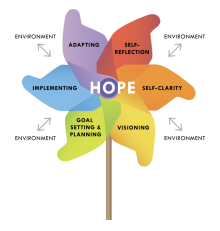
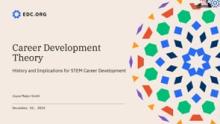
The world is changing rapidly and so too are the career opportunities available. How can we best support the career development of youth so that they can take full advantage of what the world has to offer? What influences career direction? What elements shaped our own career path?
Posted:
On Thursday, October 31, we hosted Drs. Chris Meyer and Julie Poynsenby of the Coeur d'Alene Tribe Department of Education as they discussed colonialism and how it is deeply embedded in the social, political, economic, and environmental structures. Despite natural resources and environmental careers importance to tribes, less than 20% of Native Americans graduating from college do so with STEM degrees, with numbers decreasing in the past five years.
ITEST Snapshot 2023: An Overview of NSF's ITEST Program (Publication)
Posted:
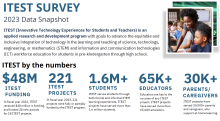
The attached ITEST Snapshot document provides an overview of the National Science Foundation's ITEST Program. The data for this report was derived from NSF's Award Search database, and project survey data collected by STELAR (the New Project Survey and Annual ITEST Survey).
Shared Practices & Implications from the 2022 NSF ITEST Principal Investigator Meeting (Publication)
Posted:
The 2022 PI meeting was held as a thematic working meeting focused on field building and experience sharing. Projects were asked to come prepared to share ongoing/formative experiences about their incomplete work. During the meeting, projects engaged in sharing and reflection around the meeting themes with the goal of gathering input, getting unstuck, collecting insights, and receiving advice.
Posted:
The National Science Foundation published NSF 23-115, “Advancing Microelectronics Education” in May 2023 in response to the CHIPS and Science Act of 2022 (CHIPS Act). This Dear Colleague Letter (DCL) encourages submission of proposals for projects that will excite, motivate and prepare students for participation in the microelectronics industry, in both formal and informal settings.
Posted:
The second webinar in support of encouraging Scaling, Expanding and Iterating Innovations (SEI) proposals invited back ITEST Principal Investigators to share their successes and challenges on scaling their work in the ITEST 2022 PI Meeting. The presentations was followed by a Q&A with PIs.
Presented by:
Posted:
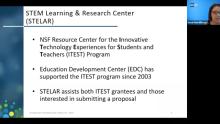
The National Science Foundation’s Innovative Technology Experiences for Students and Teachers (ITEST) Program supports applied research and development focused on increasing preK-12 students' interest in careers in information and communication technology and STEM through innovative technology-based learning experiences. As the resource center for the NSF ITEST Program, STELAR is charged with supporting prospective PIs in developing competitive proposals.
Posted:
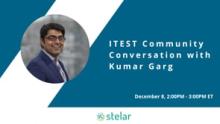
On Thursday, December 8, STELAR hosted a webinar with Kumar Garg, Vice President of Partnerships and Managing Director of the Science Technology and Society portfolio at Schmidt Futures. During the webinar, Mr.
Posted:
Keynote speaker Robert Simmons III, Head of Social Impact and STEM Programs, Micron Technology, discussed the outreach initiatives designed to expose and attract diverse high school students and first-year college students to STEM. This presentation was followed by a Q&A session.

Posted:
NSF Program Officers moderated as we heard five experts present on the core issues and foundational knowledge that K-12 education can incorporate for the preparation of future equitable STEM workforce. Each brief presentation was followed by a Q&A session.
Posted:
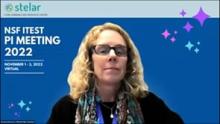
NSF Program Officer & guest speaker moderated a panel discussion of seven ITEST Principal Investigators & Co-PIs as they shared successes and challenges in scaling their ITEST project work. The panel was followed by a Q&A session and a breakout discussion where participants had the opportunity to respond to guiding questions and brainstorm collaboratively online using virtual stickies to brainstorm and exchange ideas.

Posted:
This session conducted a conversation between four people from two projects as they talked about their work with a focus on use of technology to support STEM education for learners with disabilities. NSF PO moderated this discussion with facilitation by DIEA keynote speaker, Jeannine Dingus-Eason. The conversation was followed by a Q&A session.

Posted:
Keynote speaker Jeannine Dingus-Eason, Dean of the Feinstein School of Education and Human Development (FSEHD), Rhode Island College, shared suggestions for moving forward and shared key takeaways to consider in relation to DIEA and STEM.
Posted:
NSF Program Officers invited four ITEST Principal Investigators, to share challenges, successes, and affordances as it related to their work, and posed questions for one another for the audience to considered. The conversation was then continued in two breakout discussions where participants had the opportunity to respond to guiding questions around their topic of interest and brainstorm collaboratively online.

ITEST PI Meeting 2022: Day 1, Session 1: Emerging Theoretical Concepts, Instruments, and Tools (Video)
Posted:
During this session NSF Program Officers introduced three ITEST Principal Investigators to share their work around emerging theoretical concepts, instruments, and tools. Each brief presentation was followed by a Q&A session and an opportunity to brainstorm collaboratively online using virtual stickies to exchange ideas.
Posted:
Keynote speaker Kumar Garg, Vice President of Partnerships and Managing Director of Schmidt Futures, spoke to this year's themes and shared his perspective on trends and emerging opportunities.
Posted:
During this session NSF Program Officers moderated a panel discussion of four ITEST Principal Investigators about strategies for developing effective strategic partnerships. The conversation focused on multilevel partnerships, implications of bringing partners; what is unexpected; addressing challenges and inequities; developing meaningful partnerships to remove barriers and provide inclusive environments; flexibility; effective communication.
Posted:
NSF Program Officer Joan Walker moderated a panel discussion of five ITEST Principal Investigators to reflect on essential questions around the topic. Speakers had originated some of the most powerful and popular frameworks used by the field today. The conversation addressed several essential questions that advanced the field, and was was followed by a Q&A session.

Posted:
STELAR PI Sarita Pillai reflected on key takeaways from Day 1 of the PI Meeting and give participants and speakers alike the opportunity to share key takeaways, things that they learned, and/or things that were surprising.
ITEST PI Meeting 2022 - Day 1, Welcome & Opening Remarks by EDU Assistant Dir. James L. Moore (Video)
Posted:
Welcome & Opening Remarks
During this opening session, we heard opening remarks from NSF leadership on the meeting themes and an overview of the past year’s ITEST award portfolio.
ITEST Snapshot 2022: An Overview of NSF's ITEST Program (Publication)
Posted:
The attached document provides an overview of the National Science Foundation's ITEST Program. The data for this report was derived from NSF's Award Search database, and project survey data collected by STELAR (the New Project Survey and Annual ITEST Survey).
Click the image below to view the full report.
Posted:
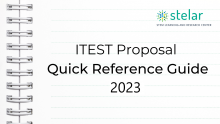
STELAR’s ITEST Proposal Quick Reference Guide 2023
Guide Preview:
This document is STELAR’s high-level summary of the required elements of your ITEST proposal. This summary is not intended to replace a careful review of both the ITEST Solicitation as well as the PAPPG. Check out STELAR’s ITEST Proposal Development Course for a more detailed explanation of any of the sections listed (note: registration for the course is free, but required).
STELAR Webinar: K-8 STEM Career Competencies: Developing Foundational Skills for the Future of Work (Video)
Posted:
On June 28, STELAR hosted authors Jessica Juliuson, Joyce Malyn-Smith, Sarah MacGillvray, and Clara McCurdy-Kirlis as they presented an overview of the competencies for their publication K-8 STEM Career Competencies: Developing Foundational Skills for the Future of Work.
Posted:
This piece was original authored by Brianna Roche in 2020 and has been updated to align with the most recent ITEST solicitation.
Building the Foundational Skills Needed for Success in Work at the Human-Technology Frontier (Publication)
Posted:
The proliferation of new technologies has changed the way we live, learn, and work. Although the future of work is unclear, thought leaders, including the National Science Foundation (NSF), assert that artificial intelligence, the Internet of Things, robotics, and machine learning will be ubiquitous in tomorrow’s workplaces.
Next Generation STEM Learning for All: Envisioning Advances Based on NSF Supported Research (Publication)
Posted:
This report presents important takeaways from a one-day National Science Foundation (NSF)-supported Forum, “Next Generation STEM Learning for All,” organized by Education Development Center (EDC) and SRI International through the STEM Learning and Research Center (STELAR) at EDC, the Community for Advancing Discovery Research in Education (CADRE) at EDC, and the Center for Innovative Research in Cyberlearning (CIRCL), working in close collaboration with NSF and the White House Office of Scien
STELAR Brochure 2015 (Publication)
Posted:
The STELAR Brochure is a two-page document that contains detailed information about STELAR's goals and the services STELAR provides to the ITEST community.
Seven Lessons Learned in Eight Years Hosting the ITEST Learning Resource Center at EDC (Publication)
Posted:
On July 11, 2011 Joyce Malyn-Smith and Siobhan Bredin presented “Seven Lessons Learned in Eight Years of Hosting the ITEST Learning Resource Center at EDC,” as part of a panel session for a cross-division audience of National Science Foundation program officers who are interested in including resource centers in their upcoming program solicitations.
Presented by Joyce Malyn-Smith and Siobhan Bredin at the National Science Foundation, Washington, DC, July 2011.
Posted:
The focus of this literature review is out-of-school time activities in informal environments, a “vastly understudied” set of experiences (Carnegie Council on Adolescent Development 1992), and the role these experiences can have in shaping the direction of youth to pursue STEM careers.
New Skills, New Experiences - The Future of Learning: Highlights of the ITEST 2005 Symposium (Publication)
Posted:
The 2005 Summit Symposium event brought together ITEST project staff and invited external thought leaders. This publication summarizes key points of the panelists for the session on "The Importance of IT & STEM Learning: Behind the ITEST Agenda," and documents dimensions of the ITEST projects' work and impact on learning & careers.
Posted:
The first issue of the Insights and Innovations in STEM Learning series synthesizes learnings from a thematic analysis of ITEST projects’ reported outcomes, challenges, and innovations.
ITEST Info Brief: Active Learning in the Information Age (Publication)
Posted:
ITEST LRC Info Brief Volume 1, July 2004
ITEST project staff contributed to thoughtful discussion around how specific technologies can be harnessed to enhance academic learning and creative expression.
Posted:
ITEST LRC Info Brief September 2010
This 2010 ITEST Information Brief shares examples and data about how the ITEST program strives to connect workforce development needs and K-12 learning in and out of school.
ITEST Idea Brief: Recruiting and Retaining Diverse Participants through Community Partnerships and Other Strategies (Publication)
Posted:
ITEST LRC Idea Brief Volume 4, March 2006
In this Idea Brief, Principal Investigators from three youth-based ITEST projects discuss how community partnerships strengthen their efforts to recruit and retain diverse participants.
ITEST Idea Brief: Summer Programs Tips & Tricks (Publication)
Posted:
ITEST LRC Idea Brief Volume 1, June 2005
This Idea Brief shares tips and tricks from four different ITEST projects around planning and implementing summer programs.
A Program Director's Guide to Evaluating STEM Education Programs: Lessons Learned from Local, State, and National Initiatives (Publication)
Posted:
In today's world of high accountability, strong evidence on intended outcomes is key to building credibility and replicability of science, technology, engineering and mathematics (STEM) programs. This primer, for program directors/managers, educators and others responsible for developing and implementing STEM programs:
The ITEST Learning Resource Center's Online Evaluation Database: Examples from the Collection (Publication)
Posted:
The ITEST Learning Resource Center at EDC developed an online database of instruments developed by ITEST project evaluators and researchers from 2003 to 2007. This 2007 article details the purpose and development of that database and highlights three instruments from it that represent the kind of evaluation tools archived there. While the database is no longer available, the three instruments described in the article provide useful examples of project-developed evaluation tools.
Posted:
Preparing Tomorrow's STEM Workforce through Exploration, Equity, and Engagement is a product of the previous ITEST Learning Resource Center (LRC) and includes a series of six articles (plus a preface) highlighting key themes and lessons learned in the first five years of the ITEST program. During these years, the LRC, funded by NSF to serve as a central point of coordination and communication across all funded projects, had a unique vantage point from which to observe the pioneering efforts of the projects.
Posted:
ITEST LRC Info Brief Volume 2, September 2004
This publication addresses the concept that equity in education refers not only to equal access or equal treatment, but to education that addresses the differing needs of different populations and that produces equitable outcomes, regardless of gender, race, ethnicity, disability, and class.
Engaging Girls and Women in Science, Technology, Engineering, and Mathematics: The Future Workforce (Publication)
Posted:
This report on a webcast hosted by the ITEST Learning Resource Center identifies resources and key success strategies for engaging girls in STEM, offered by an expert panel of speakers from the ITEST community, private sector and research and policy fields.
Computational Thinking for Youth (Publication)
Posted:
The ITEST Small Working Group on Computational Thinking (CT) has completed its White Paper titled: Computational Thinking for Youth. The paper aims to describe what computational thinking looks like when practiced by youth in ITEST and other NSF funded programs and how educators can support growth in computational thinking. It shares examples of CT as observed in middle school projects. It also shares observations in the form of a model that describes three sta
Posted:
ITEST LRC Idea Brief Volume 2, August 2005
Posted:
This report is based on the experiences of schools and communities around the country, funded by the National Science Foundation's Innovative Technology Experiences for Students and Teachers (ITEST) program. Results show that taking part in an ITEST engineering project can lead to an increase in: